Dispatch · Nº 001 · September 2026
The Economy of Restraint
The Dispatch
Nº 001 · September 2026
The
Economy of
Restraint
On brands that grow by removing, and the cultural premium of saying less.
There is a new silence moving through the culture. Not absence — precision. Across fashion, architecture, branding, and the places we choose to inhabit, the most resonant work is being made by people who have stopped adding and started removing. The result is not emptiness. It is economy: every remaining element carrying more weight, more meaning, more margin.
Restraint reads as confidence. It is also an economic position: fewer products, fewer messages, fewer channels — each carrying more weight and more margin.
This is not minimalism as aesthetic preference. It is minimalism as strategic position. And the brands, designers, and destinations operating from this position are outperforming the ones still reaching for volume.
The instinct has a lineage. What we are seeing now is not the invention of restraint but its vindication — the moment the market caught up with a principle that a small number of designers, architects, and thinkers have maintained for decades, sometimes at commercial cost. The difference today is that the economics have arrived. The data is no longer anecdotal. It is structural.
I
The Precedent
Every movement has its ancestors. The current economy of restraint descends from a specific creative tradition — one that treated reduction not as limitation but as discipline.


The Bauhaus, founded in Weimar in 1919, established the philosophical ground: that form and function could be fused, that ornamentation was a kind of dishonesty, and that design should serve life rather than decorate it. Walter Gropius, Mies van der Rohe, and their successors built a vocabulary that treated clarity as a moral position. When Mies wrote “less is more,” it was not an aesthetic slogan. It was a structural argument about where meaning resides when everything unnecessary has been removed.
Dieter Rams, who joined Braun in 1955 and served as its chief design officer for more than three decades, translated that argument into consumer products. His ten principles of good design — which include “good design is as little design as possible” — produced over five hundred products now held in museum collections worldwide. Rams' mantra, Weniger, aber besser — less, but better — became the operating system for a generation of industrial designers. Jonathan Ive has explicitly acknowledged Rams as a primary influence. The iPod echoes the Braun T3. The iPhone calculator replicates the logic of the ET66. Apple's rise was built, in no small part, on the principle that restraint is not the enemy of desirability — it is its engine.
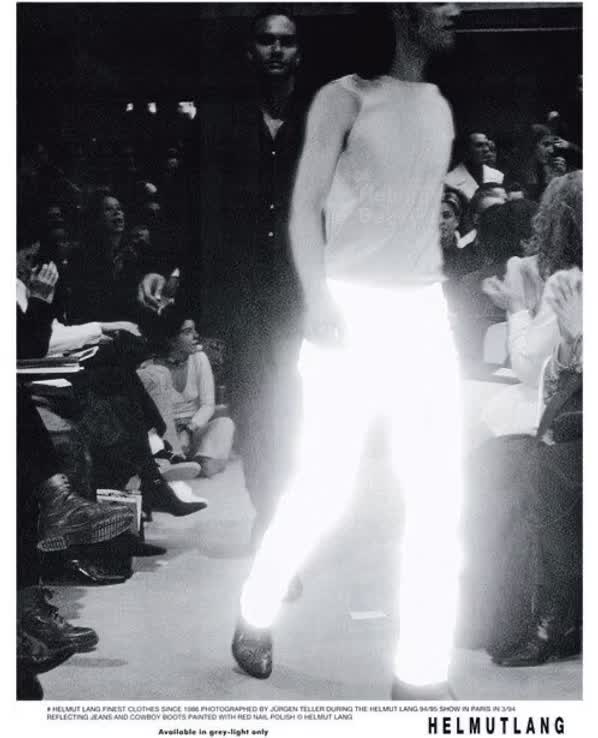
In fashion, the 1990s produced the movement's most charismatic voices. Helmut Lang, self-taught and initially based in Vienna, redefined the decade with a pared-down aesthetic that blended minimalism with subtle deconstruction. Black and white palettes. Flat-front trousers. Elevated basics treated with the precision of couture. In 1998, Lang moved to New York and restructured the fashion calendar by showing a week ahead of the European collections — a change that became permanent. Lang proved that restraint could be both radical and commercial.
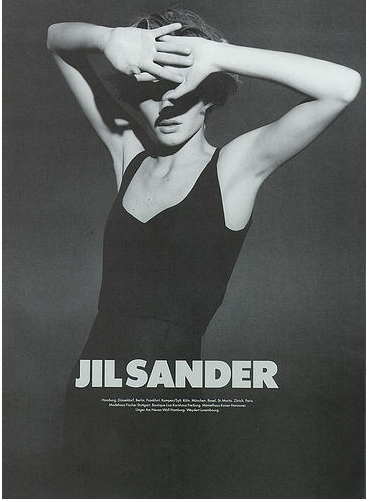
Jil Sander, who founded her house in Hamburg in 1968, made a career of what she called “the most honest form of designing.” No logos. No decoration. Only cut, fabric, and proportion. She was fired and rehired by Prada Group three times — a pattern that speaks less to corporate dysfunction than to the difficulty of sustaining radical simplicity inside a structure built for volume.
Calvin Klein in the 1990s. Comme des Garçons in its quieter registers. Maison Margiela, with its anonymous white labels and deconstructed linings. These were not marginal positions. They were arguments about what fashion could be when it stopped performing and started serving. The current movement inherits all of them.
II
The Fashion Case — And Its Numbers
The 2025–2026 luxury market has split into two economies, and the data is now too clean to ignore.
On one side: the conglomerates. LVMH recorded revenue of €80.8 billion in 2025 — but that figure masks a structural decline. Group revenues fell five percent after dropping two percent the year before. Profits fell nine percent to $20.6 billion. Fashion and leather goods, nearly half of group sales, dropped eight percent. Kering recorded a thirteen-percent decline in FY2025 revenue to €14.7 billion, ceding its ranking to Hermès. Interbrand reported a five-percent drop in top luxury brand valuations in late 2025 and declared the luxury supercycle over.
On the other side: the houses built on restraint.
Hermès reported FY2025 revenue growth of nine percent, surpassing €16 billion for the first time, with an operating margin of forty-one percent. The model: controlled supply, vertically integrated artisanal production, limited wholesale exposure, sustained full-price demand, and almost no discounting.
Brunello Cucinelli posted record FY2025 revenues of €1.41 billion, up 11.5 percent, and accelerated into 2026 with fourteen-percent growth at constant exchange rates. While LVMH and Kering cycle creative directors and announce impairments, Cucinelli holds its position by making fewer products, selling at full price, and refusing to chase trends.
The Row has never run a single advertisement. It bans phones at its runway shows. In September 2024 it sold a minority stake at a one-billion-dollar valuation. Phoebe Philo's label — launched in 2023 with no runway show, no flagship, almost no press — tripled annual revenue to roughly forty-four million dollars by 2025, direct-to-consumer, no markdowns. The constraint creates scarcity. Scarcity creates desire. Desire at controlled volume converts to margin.
The pattern is structural, not anecdotal: the houses growing fastest are the ones saying least. And the conglomerates in crisis are the ones that expanded most aggressively during the post-pandemic surge — more SKUs, more stores, more campaigns, more noise. The market is now punishing that excess.
III
The Architecture of Silence
The same logic operates in space. The most affecting architecture of this moment is not the most complex. It is the most considered.
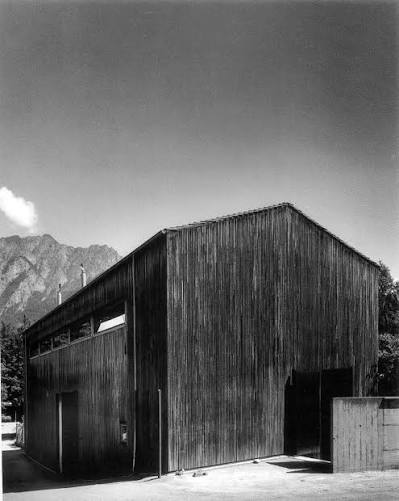
Peter Zumthor's Therme Vals, built from locally quarried quartzite, functions less as a building and more as a geological event. Sound echoes differently across chambers. Stone absorbs and releases heat. Light enters through thin cuts that soften the weight of the ceiling. Zumthor has written: “To me, buildings can have a beautiful silence that I associate with attributes such as composure, self-evidence, durability, presence and integrity.” His firm has no website. He rarely publishes. The work speaks for itself.
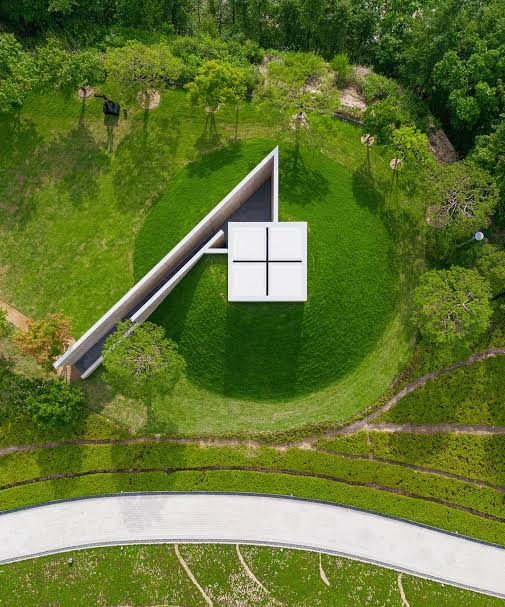
Tadao Ando's Church of the Light in Ibaraki takes this further: a concrete box with a single cruciform incision. Entry is indirect, moving between walls before reaching the main space. Darkness sharpens perception. The architecture does not speak. It holds.
John Pawson has made a career out of designing what is not there — Nový Dvůr Monastery is almost aggressively silent. David Chipperfield builds a refined concrete minimalism that bridges brutalism and classical restraint. These architects share a conviction that descends directly from the Bauhaus: the strongest spaces are the ones that stop performing.
IV
The Balearic Position
Mallorca occupies a particular position in this movement, because restraint is not imported here — it is indigenous. Marés sandstone. Lime-washed walls. Deep-set windows that frame light and exclude heat. Courtyards that turn privacy into spatial drama. The traditional finca is, structurally, a minimalist proposition: mass, aperture, shade, silence.
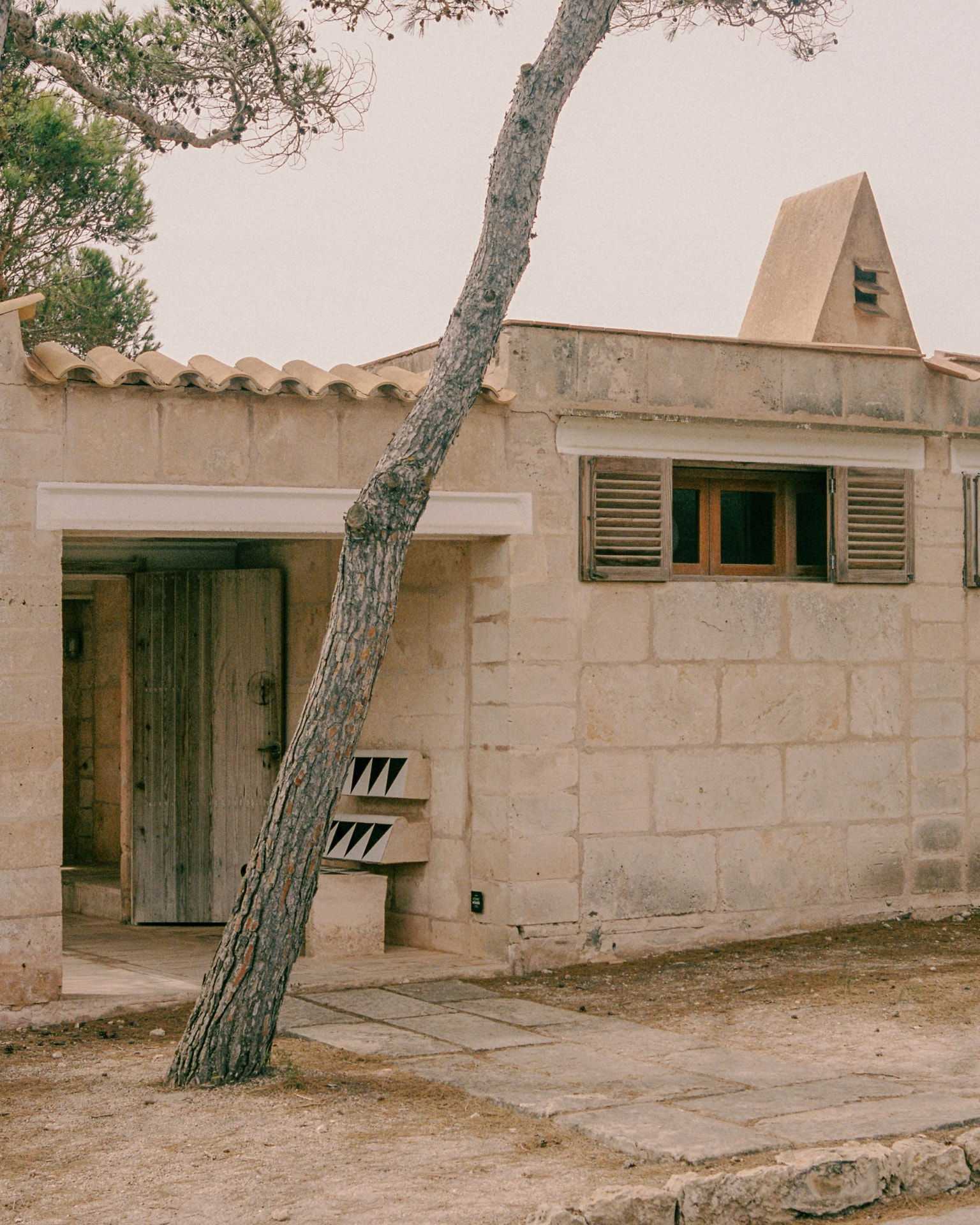
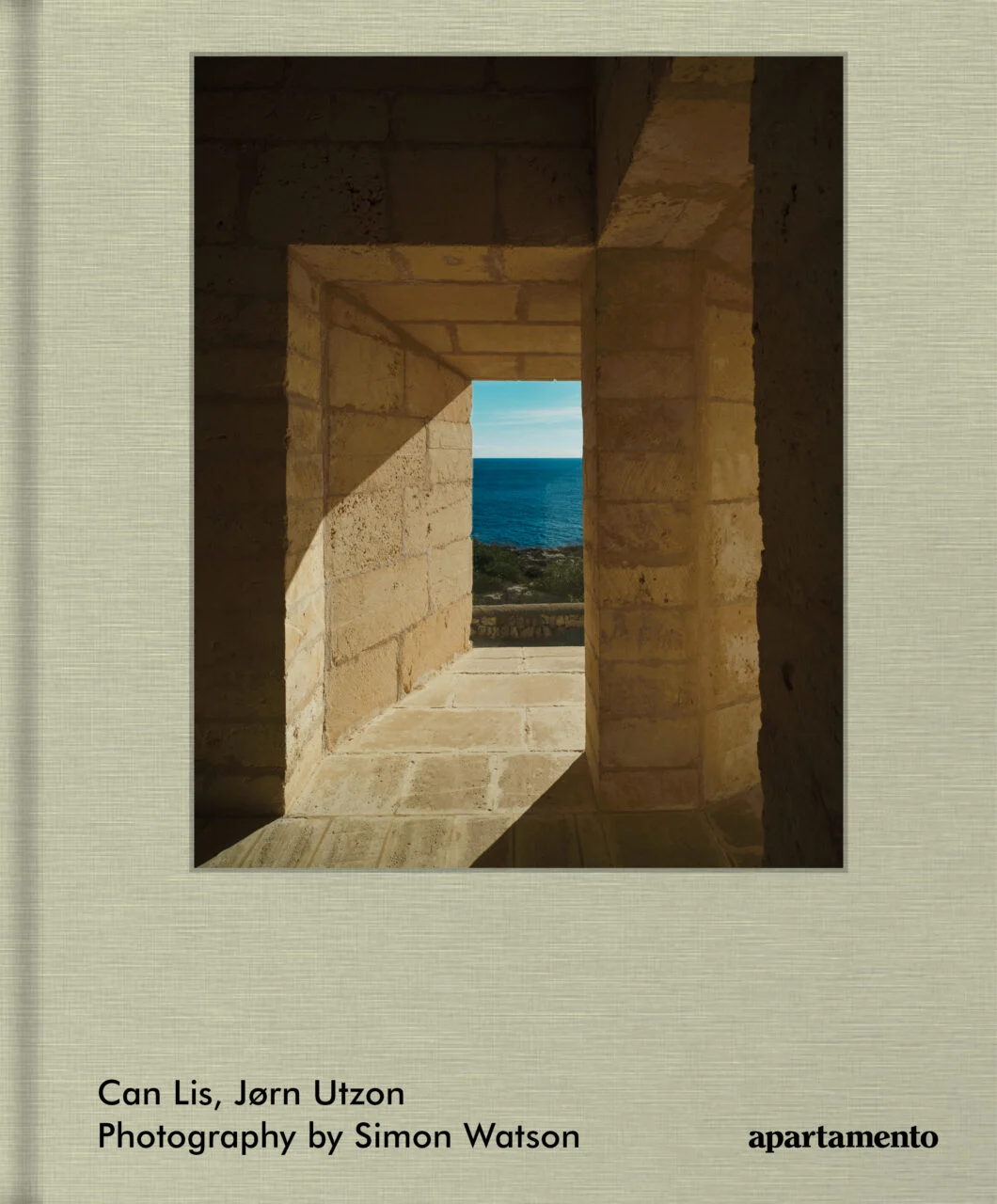
Jørn Utzon understood this when he built Can Lis on the cliffs near Portopetro in 1971 — after walking away from the Sydney Opera House. The house is fragmented into pavilions, each with a specific function, built from local marés stone. Most of the furniture is carved from the same material. The window frames, mounted on the exterior surface of the walls, manipulate Mediterranean light with surgical precision. It is restraint as architecture's highest ambition.
Today the island is pivoting from mass tourism toward experience-led luxury. The global luxury travel market, valued at $1.6 trillion in 2025, is projected to reach $3 trillion by 2033 — but the driver is no longer mass luxury. Growth is fuelled by personalisation, wellness, and low-density formats. Restored monasteries, rural estates, and design hotels that compete on silence rather than spectacle. The Balearics are not following the restraint trend. They are, in many respects, its source material.
V
Destinations That Mirror The Effort
Beyond the Balearics, a global network of places shares the same values — design rooted in local material, silence as amenity, heritage as operating system rather than decoration.
Puglia: masserie converted with interiors that honour rather than obscure the original stonework. Kyoto: the original architecture of restraint, where reduction is not the absence of thought but the presence of more thought, compressed into less. Oaxaca: clay, volcanic stone, and artisan knowledge as living material practice. Sancerre: luxury as continuity rather than novelty. AlUla: mud-brick rebirth recognised by the Wallpaper* Design Awards 2026.
What connects them is a shared refusal to separate design from geography, material from meaning, or heritage from the contemporary. They are places where less has always been the local language — and where the rest of the world is finally learning to listen.
VI
The Economic Logic
Restraint is not an aesthetic preference. It is an economic position. And in 2026, it is the winning one. Hermès (forty-one percent operating margin, nine percent growth) and Cucinelli (eleven percent growth) outperform LVMH (revenue down five percent) and Kering (down thirteen percent). The differentiator is not product category. It is operating philosophy.
In travel, the $1.6 trillion luxury market grows at 8.5 percent annually — but the growth sits in low-density formats and carefully edited experiences, not amenity lists. In design, the Bauhaus-to-Braun-to-Apple lineage has demonstrated the same principle across a century.
Fewer products mean higher margins per unit. Fewer messages mean higher impact per touchpoint. Fewer channels mean lower overhead and greater coherence.
The economy of restraint is not a contradiction. It is a thesis: that in a world drowning in signal, the premium belongs to whoever can hold silence.
VII
The Discipline Position
This is the territory DISCIPLINE operates in. Every engagement starts with research — mapping the cultural context and the economic parameters before any creative work begins. The method measures on two axes: cultural signal (clarity, coherence, resonance) and economic signal (revenue, growth, retention).
The founding thesis — culture without economy is vanity, economy without culture is noise — is itself an argument for restraint. It insists that creative work must be economically accountable, and that economic ambition must be culturally legible. Both demands reward reduction. Both punish excess.
The work spans fashion houses, automotive campaigns, cultural institutions, platform products and venture building. The common thread is not the sector but the method: start with what is true about the brand, remove everything that is not, and build outward from what remains.
Restraint is not silence for its own sake. It is the discipline of knowing what to keep.
The Dispatch
One idea, argued properly. Bi-monthly.
Take it with you